


Renewal shouldn’t mean rebuilding your year from scratch
Quick Organics is Common OSP software for crops, livestock and handling operations. Use it all season so renewal becomes a review, not a search.
- Crop farms
- Livestock
- Mixed operations
- Handlers & processors
- Maintain a year-round digital record of activities, documents, and certifications.
- Plans from $150 a year, priced by anticipated organic revenue.
Annual Update and Renewal
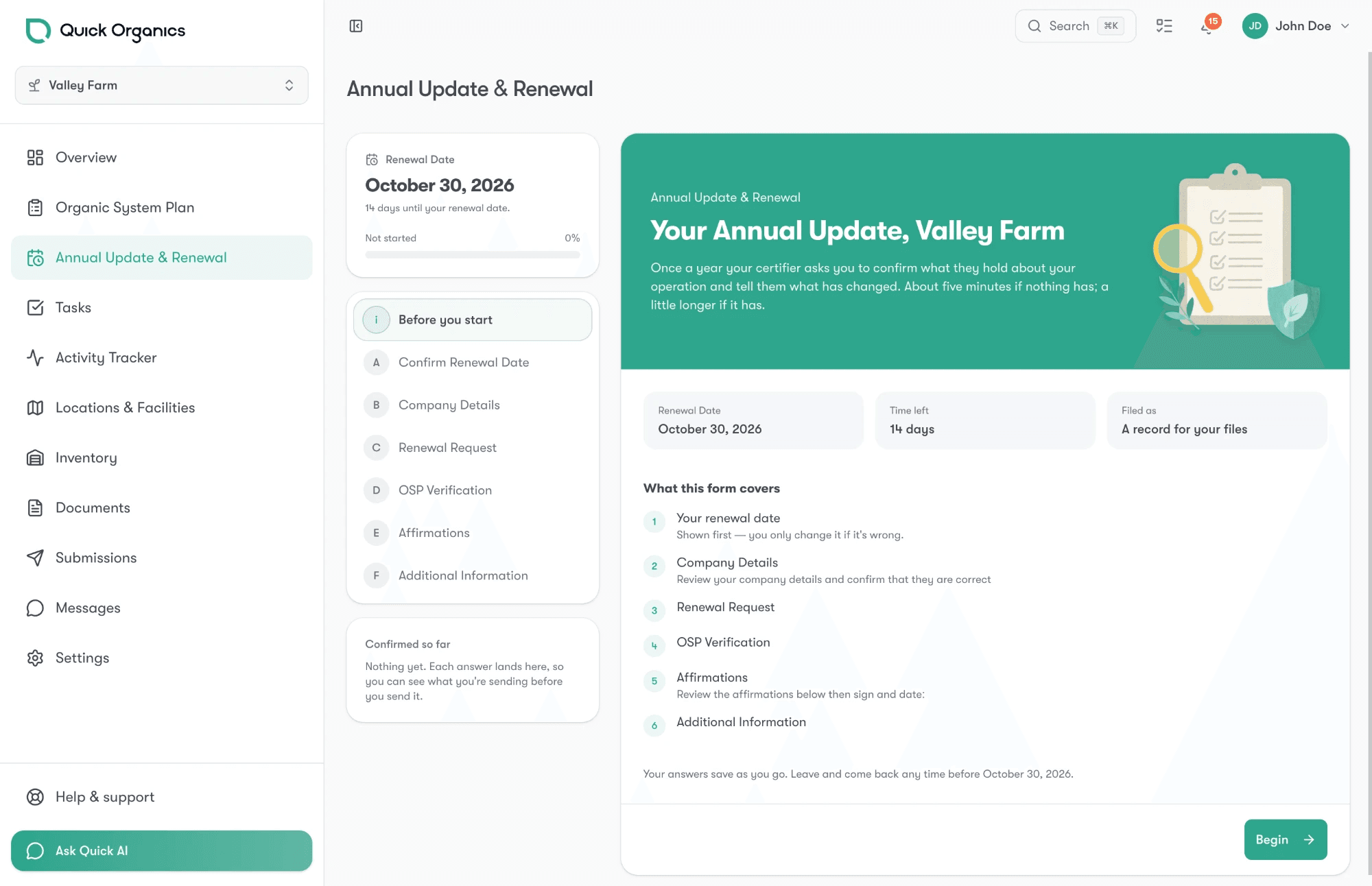
Renewing your organic certification each year means confirming your details, noting any changes to your operation, and getting signed paperwork to your certifier. You can now do all of that in Quick Organics, using the information already in your OSP.
How it works
- 1
Add your renewal date. Enter it in your Operation Settings. As your date gets close, a new Annual Update & Renewal tab appears under your Organic System Plan, and you'll see a reminder on your homepage. By default the tab opens 60 days before your renewal date. Some certifiers open it earlier to match their own timelines.
- 2
Confirm what's on file. We fill in your company name, address, primary contact and certification scopes. Mark each one “correct” or update it, and the changes carry over to your account and OSP automatically.
- 3
Tell us what's changed. If you've changed anything this year, such as new materials, suppliers, land, facilities, labels or practices, say so. You'll be taken to your OSP to update it before you submit.
- 4
Sign and submit. Review the affirmations, sign, and add any notes for your certifier. We put together a package with your renewal form and only the OSP sections that changed, so your reviewer sees exactly what’s new.
Your completed renewal form is saved in your Documents, and it's included in the package your certifier receives.
Organic renewal checklist
Five habits that make renewal a review instead of a scramble, from the people who see renewal from both sides: certifiers and farmers.
- 1
Start early. Smooth renewals usually start weeks before the deadline, right after the season wraps up.
- 2
Review your OSP. Note what changed this year: new fields, new inputs, new products, new suppliers.
- 3
Gather supporting documents. Seed and input receipts, harvest and sales records, supplier certificates and labels.
- 4
Close out last year's findings. Be ready to show how any noncompliances from your last inspection were corrected.
- 5
Ask questions now. A mid-season call to your certifier is easier than a scramble in renewal week.
Organic renewal questions
Start your renewal organized.
Free for 30 days · Cancel anytime